After Attachment
The body can be understood as both a container and a cage — the medium through which we exist in the world, form thoughts, and perform actions. In Buddhism, beings remain trapped within the cycle of rebirth because they mistake the body for the self. When the self is no longer defined through attachment to the body, the body may still perish, but it no longer determines the boundary of “who I am.” In this sense, becoming a Buddha can be understood as breaking the body as a cage — not through destruction, but through releasing the relationship of constraint.
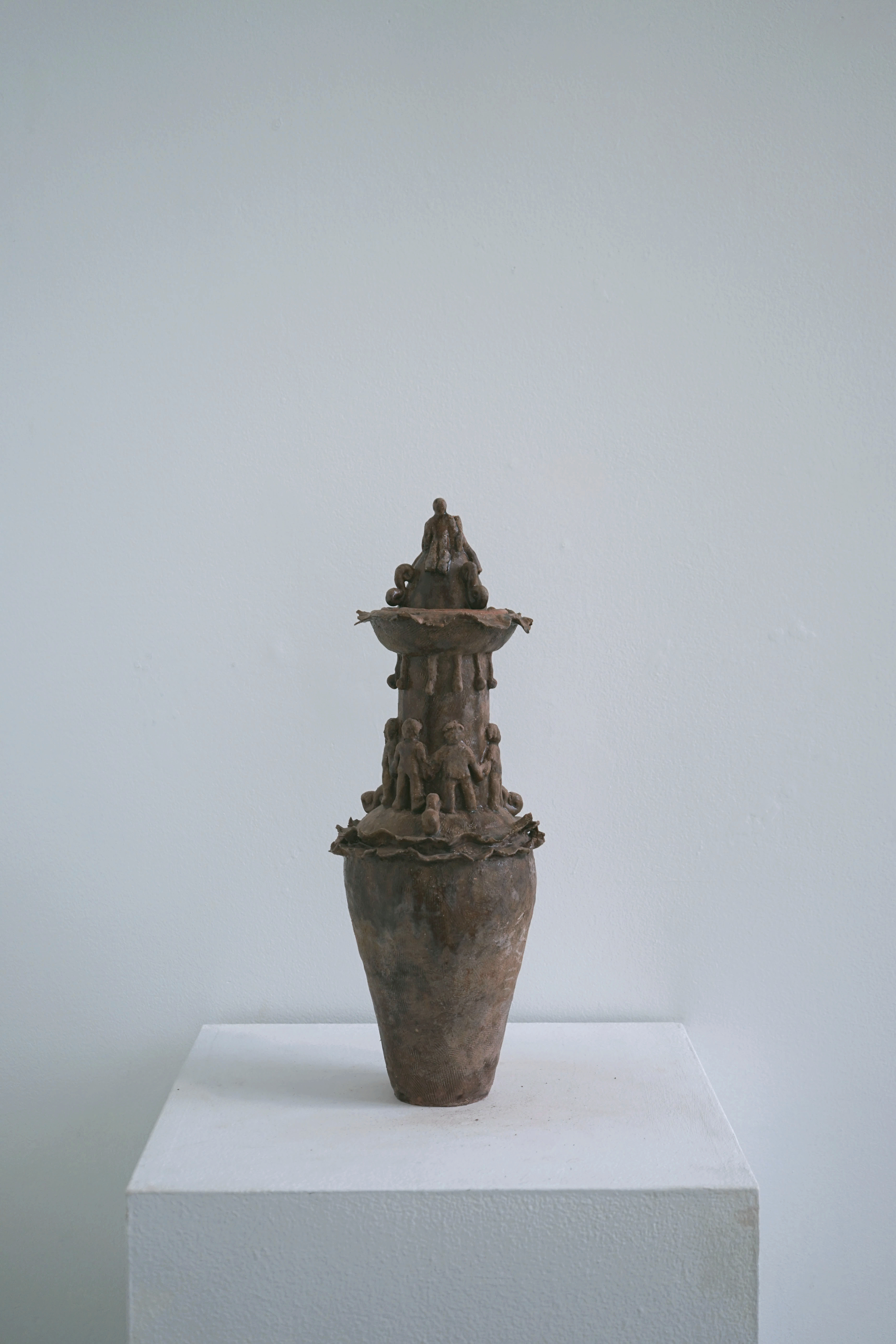
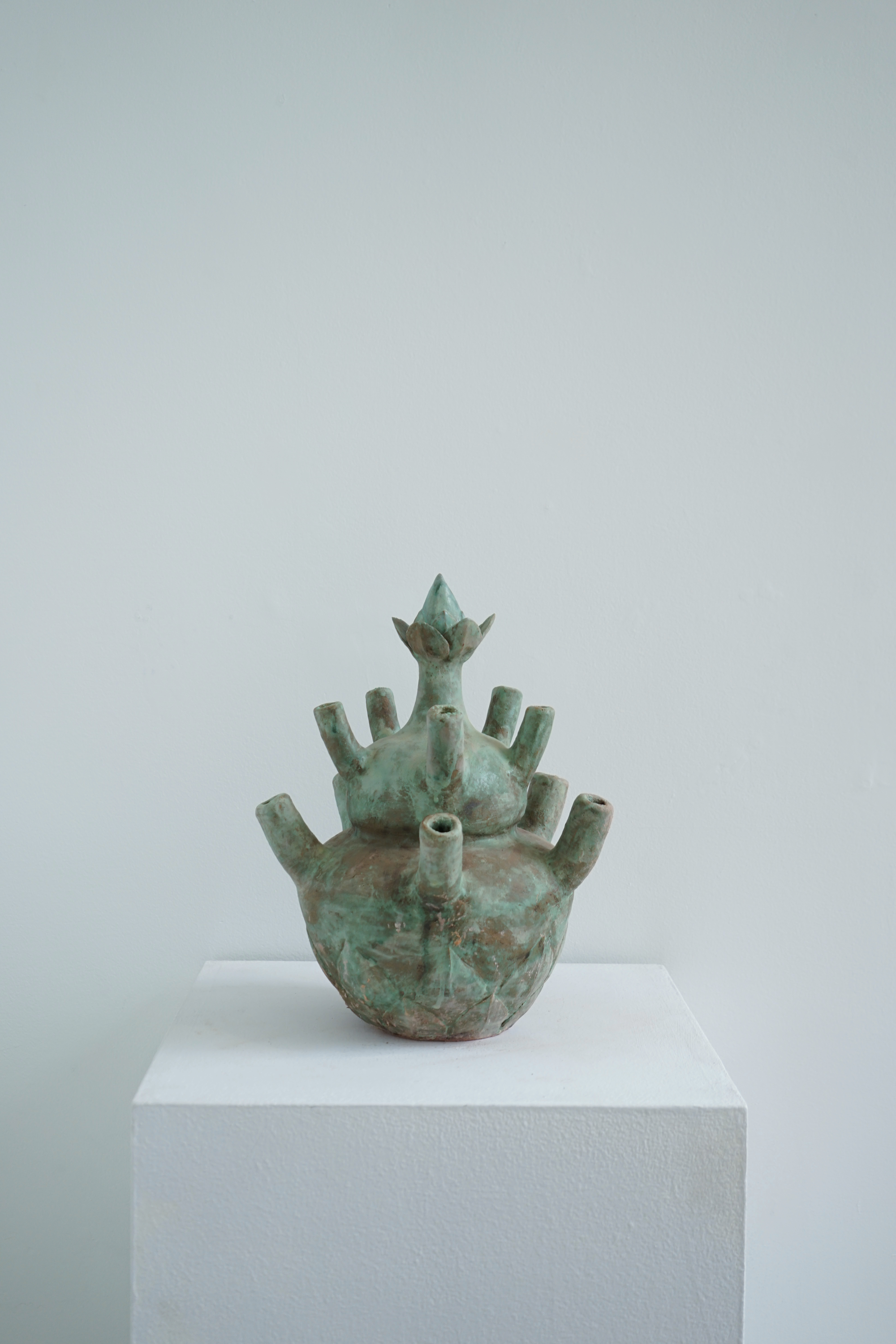
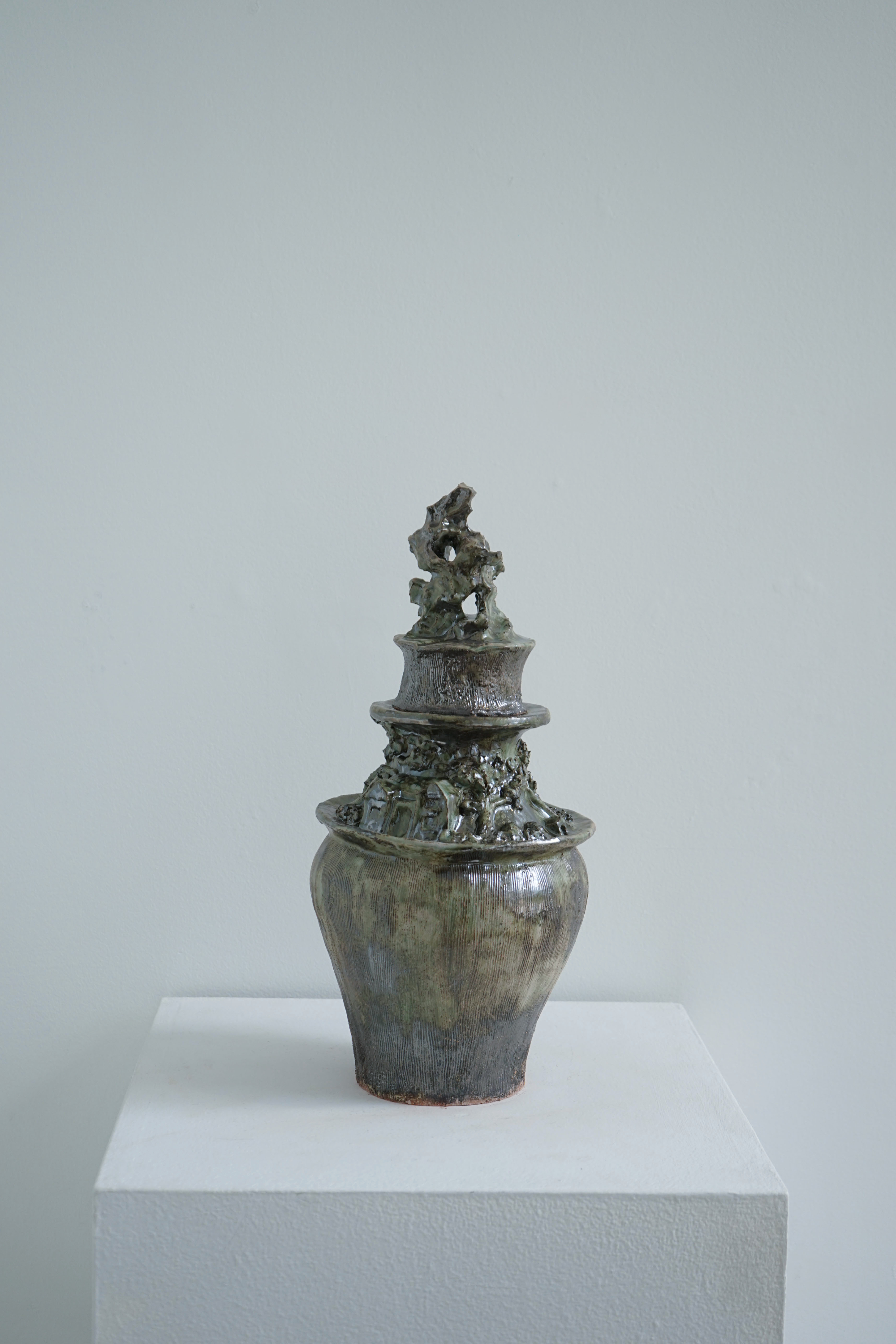
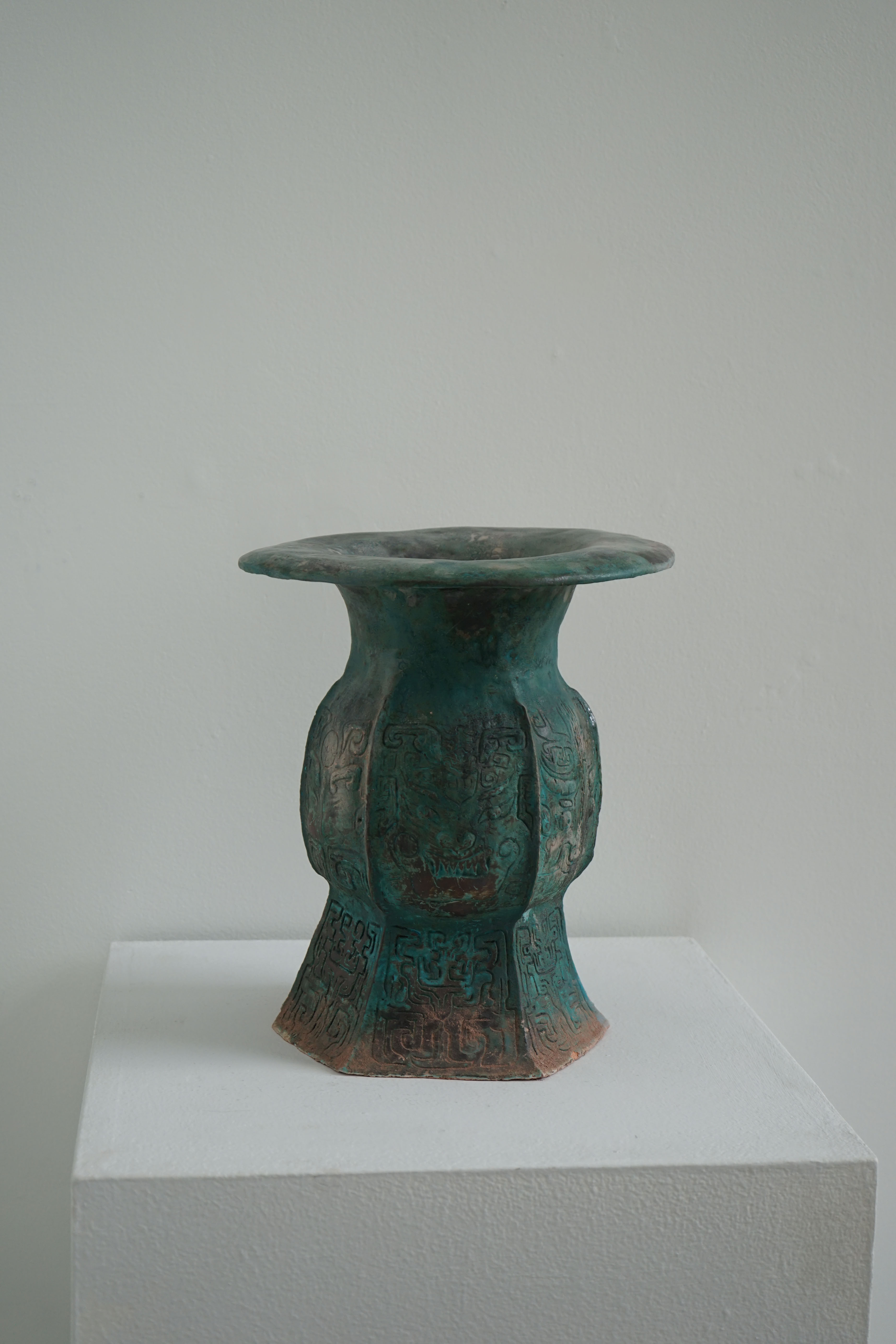
This work takes the form of my own imagined burial site, containing a skeletal body alongside a series of ceramic soul jars inspired by traditional Chinese funerary objects. Historically, soul jars carried wishes and expectations for the afterlife; in this work, they embody my present desires, attachments, and longings within this world. Each vessel materializes a different form of desire, transforming intangible emotions and beliefs into burial objects.
Death, in this work, is not presented as an escape from life, but as a symbolic state of leaving behind the invisible cages constructed by the body, society, culture, and systems of thought. By reconstructing this burial site, I attempt to make visible what is often unconsciously accepted — how identity, desire, and belief are continuously shaped by structures that surround us. The tomb becomes both an end point and a vantage point: a space where the relationship between the self, the body, and the world can be reconsidered from a distance. Through this work, I invite viewers to reflect on the constraints they inhabit, question their necessity, and imagine what it might mean to exist beyond them.